


How to Play It Like Buffett (Without the $300 Billion)

Let’s talk about Warren Buffett.
The man is 96 years old, lives in a house he bought during the Eisenhower administration, eats McDonald’s for breakfast like a college freshman with no self-respect, and is currently sitting on over $300 billion in liquid cash.
Read that number again. Three. Hundred. Billion.
While the rest of us panic-buy $7 oat milk lattes and debate whether we can afford to keep three streaming services running simultaneously, Uncle Warren is hoarding cash like a suburban dad stocking up on plywood before a Category 4 hurricane.
Why? Is he saving up to buy a small island nation? Is he planning to launch himself into space on a gold-plated rocket like the rest of the tech oligarchs? No. He’s doing something far more aggressive, far more calculated, and frankly, far more terrifying to Wall Street: absolutely nothing.
Welcome to this week’s edition of Money & Power Monday, where we analyze how the hyper-wealthy maneuver their capital while the rest of society acts like money burns a literal hole through their pockets.
The Myth of "Always Be Buying"
We live in a culture obsessed with constant action. You’re told to hustle, grind, dollar-cost average into index funds, flip real estate, and buy whatever random crypto coin your cousin’s roommate recommended on TikTok. Sitting still is treated like a personality defect. If your money isn't moving 24/7, society implies you're failing at capitalism.

Enter Warren Buffett. Berkshire Hathaway’s cash pile didn't reach astronomical heights by accident. Buffett looks at today’s stock market, sees inflated valuations, overpriced tech darlings, and eager retail investors chasing vibes, and says: “Nah, I’m good.”
Instead of buying overhyped equities at record highs, he parked his mountain of cash into short-term U.S. Treasury bills earning over 4% risk-free. Think about the audacity of that. While Wall Street money managers stress-sweat through their customized Patagonia vests trying to beat the S&P 500 by half a percentage point, a nonagenarian in Omaha is collecting billions in interest just by letting his cash sit there and do zero heavy lifting. That isn't laziness. That is pure, unadulterated financial flex.
The Power Move: Weaponized Patience
Here is the secret most people miss about money: cash isn't just currency. Cash is option value. Cash is power. Look back through the historical record, and you will notice a recurring theme: the entity holding the biggest pile of ready cash rarely loses the war. In 1803, Napoleon Bonaparte was locked in an expensive staring contest with Great Britain. He was rich in land, soldiers, and grand ambition, but he was painfully poor in actual liquid coin. Enter Thomas Jefferson, who quietly slid $15 million in gold across the desk for the Louisiana Purchase. Napoleon got the instant cash he desperately needed to fund his European military exploits, and America instantly doubled its geographical footprint for pennies on the acre. Bonaparte walked away with temporary pocket change to pay his troops; America walked away with the middle third of a continent. That isn't just real estate strategy—that’s the ultimate historical lesson in why you never let your cash reserves dry up when a desperate seller comes knocking.

If you fast-forward a century to the Panic of 1907, you find Wall Street on the verge of total, catastrophic melt-down. Bank runs were triggering widespread hysteria, the U.S. government didn't have a central bank yet to bail anyone out, and financial titans were literally weeping in their tailor-made three-piece suits. In stepped J.P. Morgan—a man who locked the nation's top financiers inside his private library, chewed on a cigar, and effectively told them nobody was leaving the room until they pooled their cash to save the economy. Morgan personally injected millions of his own liquid capital to shore up struggling institutions, single-handedly stabilizing the American financial system before lunch. Wall Street may run on confidence, but when the lights go out and panic sets in, everyone stops taking IOUs and starts looking for the guy who actually has cash in his vault.
When you spend every dime you make, or lock up every spare dollar in volatile assets because you’re terrified of missing out, you give up all your leverage. You become reactive. You’re forced to accept whatever the market, your employer, or the economy hands you.
Buffett’s $300 billion war chest isn't a sign of fear—it’s weaponized patience. He is waiting. He knows that markets are cyclical, humans are emotional, and eventually, somebody somewhere is going to make a massive mistake. When prices inevitably crash, the people who spent all their money will be begging for liquidity. And Warren will step in, cash in hand, and buy world-class companies for pennies on the dollar.
He did it in 2008, and he’s setting up the exact same chessboard right now.
How to Play It Like Buffett (Without the $300 Billion)
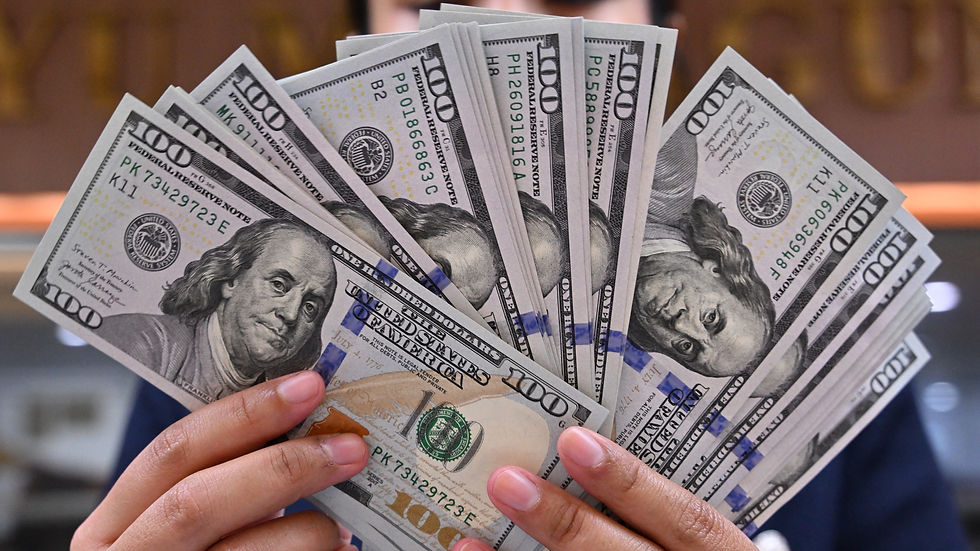
You don't need billions to adopt the mindset. You just need to stop acting like your bank account is a hot potato. The moment you stop treating every dollar like an expiring coupon, the dynamic shifts completely. Liquid cash gives you the rare luxury of refusal—the power to say no to bad deals, desperate investments, and exploitative situations simply because you aren't forced to play. Most people mistake constant financial movement for momentum, buying into the illusion that staying still means falling behind. But in a room full of panicked traders and impulsive spenders, the quietest person with the most liquidity isn't just surviving the noise; they own the room. Here's a simple perspective to consider:
Stop Forcing the Play: If an investment, a deal, or a purchase feels overpriced or desperate, walk away. Missing a hype train is better than getting hit by it.
Make Idle Money Work: Stop letting your savings sit in a traditional bank account earning 0.01% interest while the bank uses your money to build fancy towers. Put it into high-yield accounts or short-term Treasuries. Get your 4% or 5% risk-free yield while you wait.
Build Your War Chest: When the market pulls back—and it always does—cash is what allows you to act aggressively while everyone else is panicking.
Patience isn't passive. Having cash on standby is the ultimate power move. Act accordingly.



Comments